
Blockchain Gaming: Play-to-Earn Models Explained 🎮🔗
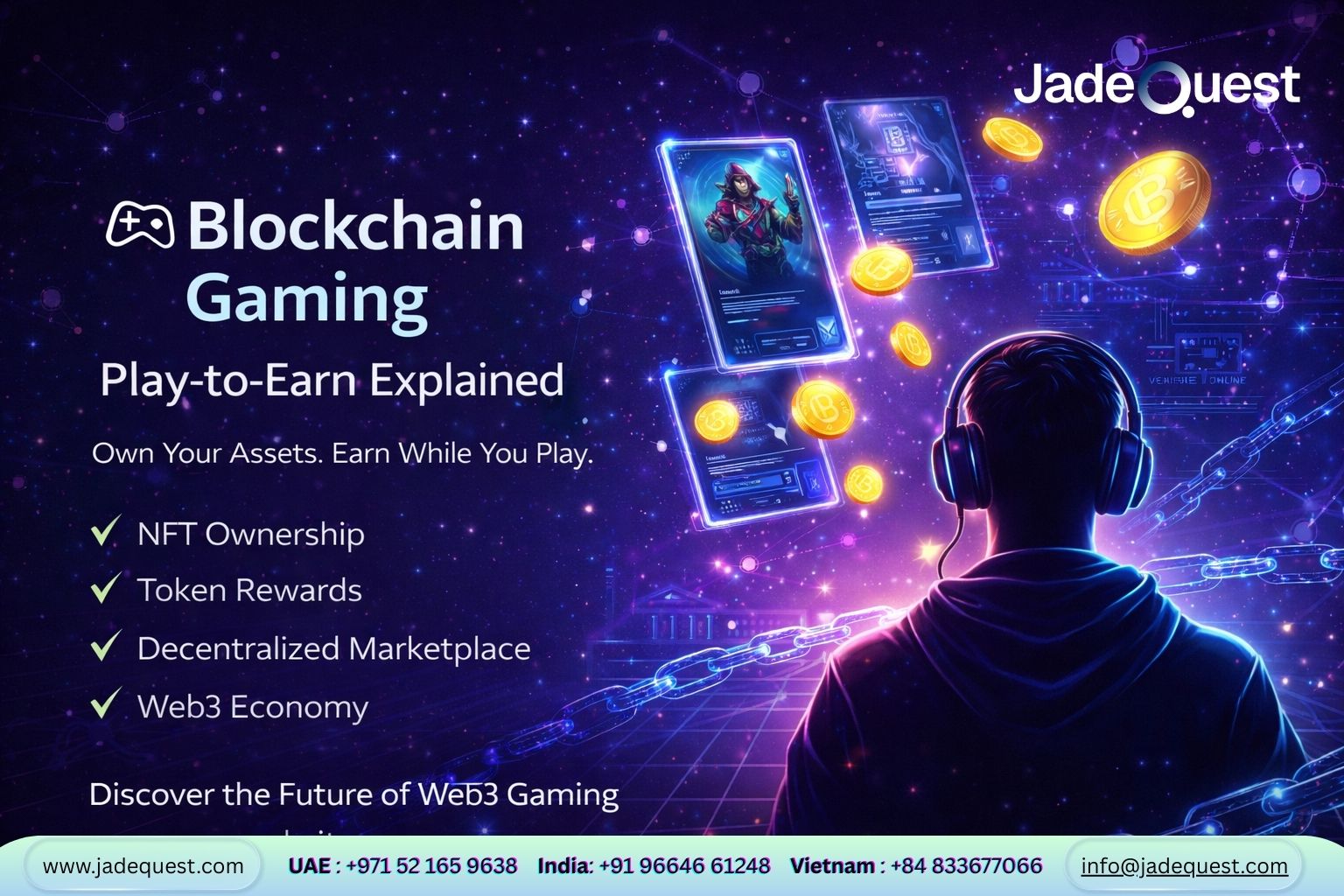
The gaming industry is evolving — not just in graphics or gameplay, but in ownership.
Blockchain gaming introduces a fundamental shift:
Players are no longer just users.
They are stakeholders.
Welcome to the era of Play-to-Earn (P2E).
🎯 What Is Blockchain Gaming?
Blockchain gaming integrates decentralized technology into game mechanics.
Instead of traditional centralized control:
- Assets live on-chain
- Ownership belongs to players
- Transactions are transparent
- Rewards are tokenized
In traditional games, you spend money.
In blockchain games, you can earn value.
💰 What Is Play-to-Earn (P2E)?
Play-to-Earn allows players to receive crypto tokens or NFTs as rewards for:
🎮 Completing missions
⚔ Winning battles
🏆 Participating in tournaments
🌍 Contributing to the ecosystem
These digital assets can be:
✔ Traded
✔ Sold
✔ Staked
✔ Used in-game
✔ Held as investments
It transforms gaming from entertainment-only into an economic layer.
🔐 Why Blockchain Matters in Gaming
Blockchain enables:
🔒 True digital ownership (NFT assets)
🌍 Open marketplace trading
📊 Transparent reward distribution
⚖ Smart contract-based fairness
💎 Scarcity through tokenomics
Your in-game sword isn’t just a cosmetic item.
It’s a verifiable digital asset.
🪙 Core Components of P2E Models
1️⃣ Utility Tokens
Used for:
- Rewards
- In-game purchases
- Governance
2️⃣ NFTs
Unique digital assets such as:
- Characters
- Skins
- Land
- Weapons
3️⃣ Staking & Yield Mechanics
Players can stake tokens to earn passive rewards.
4️⃣ Governance
Token holders can vote on game updates and proposals.
📈 The Economic Shift
Traditional gaming model:
Player → Pays → Company earns
Play-to-Earn model:
Player → Plays → Earns → Participates in ecosystem
This introduces a circular digital economy.
However, sustainability depends on:
- Balanced tokenomics
- Strong user retention
- Real utility
- Long-term ecosystem design
Without these, inflation collapses the system.
⚠ Challenges of P2E
While promising, blockchain gaming faces:
• Token inflation risks
• Regulatory uncertainty
• Onboarding complexity
• Market volatility
• Security vulnerabilities
Projects must prioritize economic sustainability over hype.
🚀 The Future: Play-and-Earn
The next evolution is not just Play-to-Earn —
but Play-and-Earn.
Fun first.
Economics second.
Successful blockchain games will combine:
🎮 Engaging gameplay
📊 Smart tokenomics
🔐 Security
🌍 Community governance
Gaming is no longer just play.
It’s digital participation.
🌟 Final Thoughts
Blockchain gaming represents a structural transformation in digital ownership.
As Web3 evolves, Play-to-Earn models will mature into sustainable digital economies — reshaping how value is created inside virtual worlds.
The question is no longer:
“Can players earn?”
It’s:
“How do we build sustainable digital gaming economies?”
𝐞𝐦𝐚𝐢𝐥: contact@jadequest.com
🌐https://jadequest.com/
🌍https://linktr.ee/jadequest
#UAE : +971 52 165 9638 | #India: +91 96646 61248 | #Vietnam : +84 833677066
#BlockchainGaming #PlayToEarn #Web3Gaming #NFTGaming #CryptoGames #Metaverse #GameFi #DigitalAssets

