
Blog
Our Blog
Stay updated with our latest insights, news, and articles
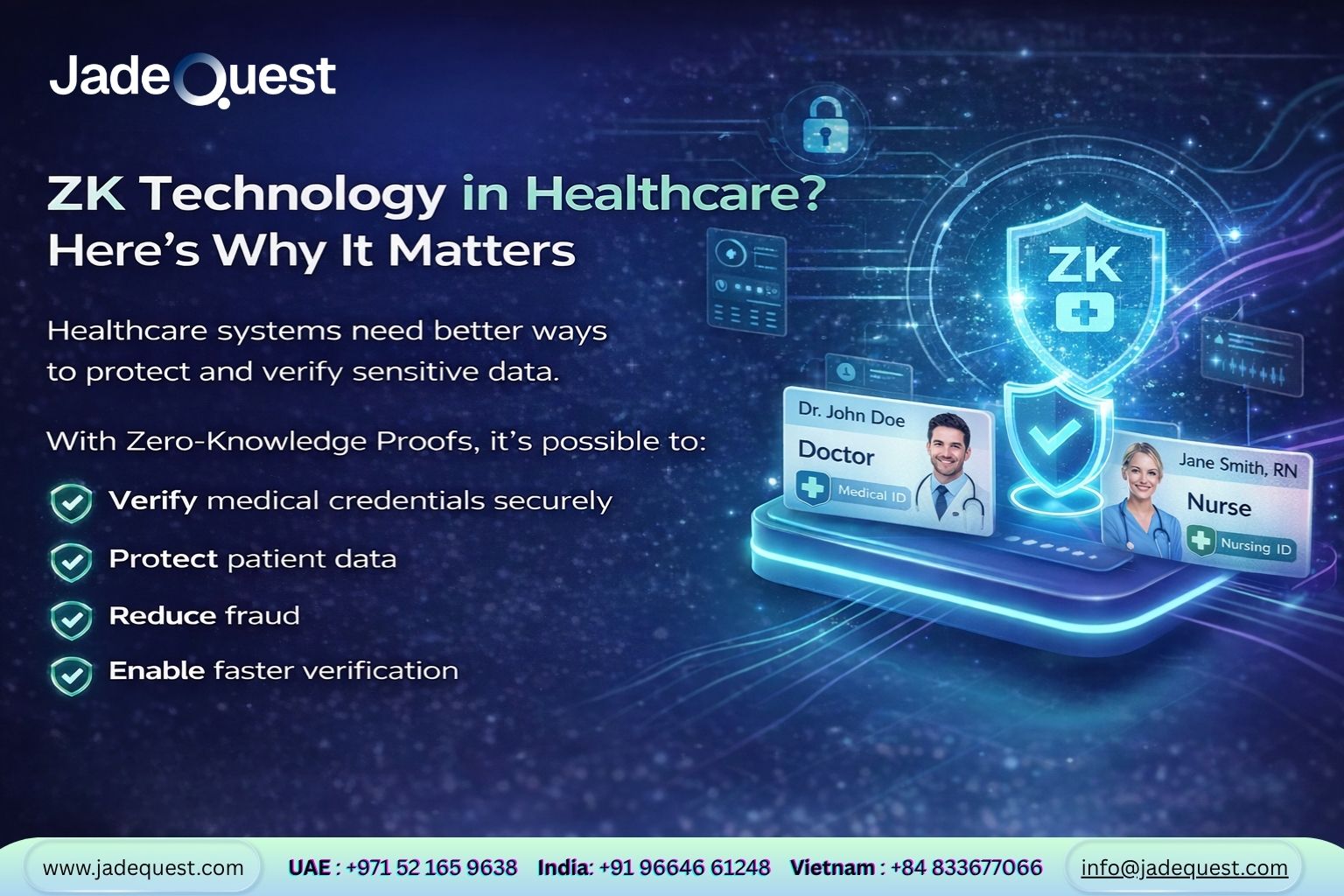
How to Build a ZK-Powered Medical Credential System
The healthcare industry faces a major challenge: securely verifying credentials while protecting sensitive data.Traditional systems rely on centralize...
Read More →
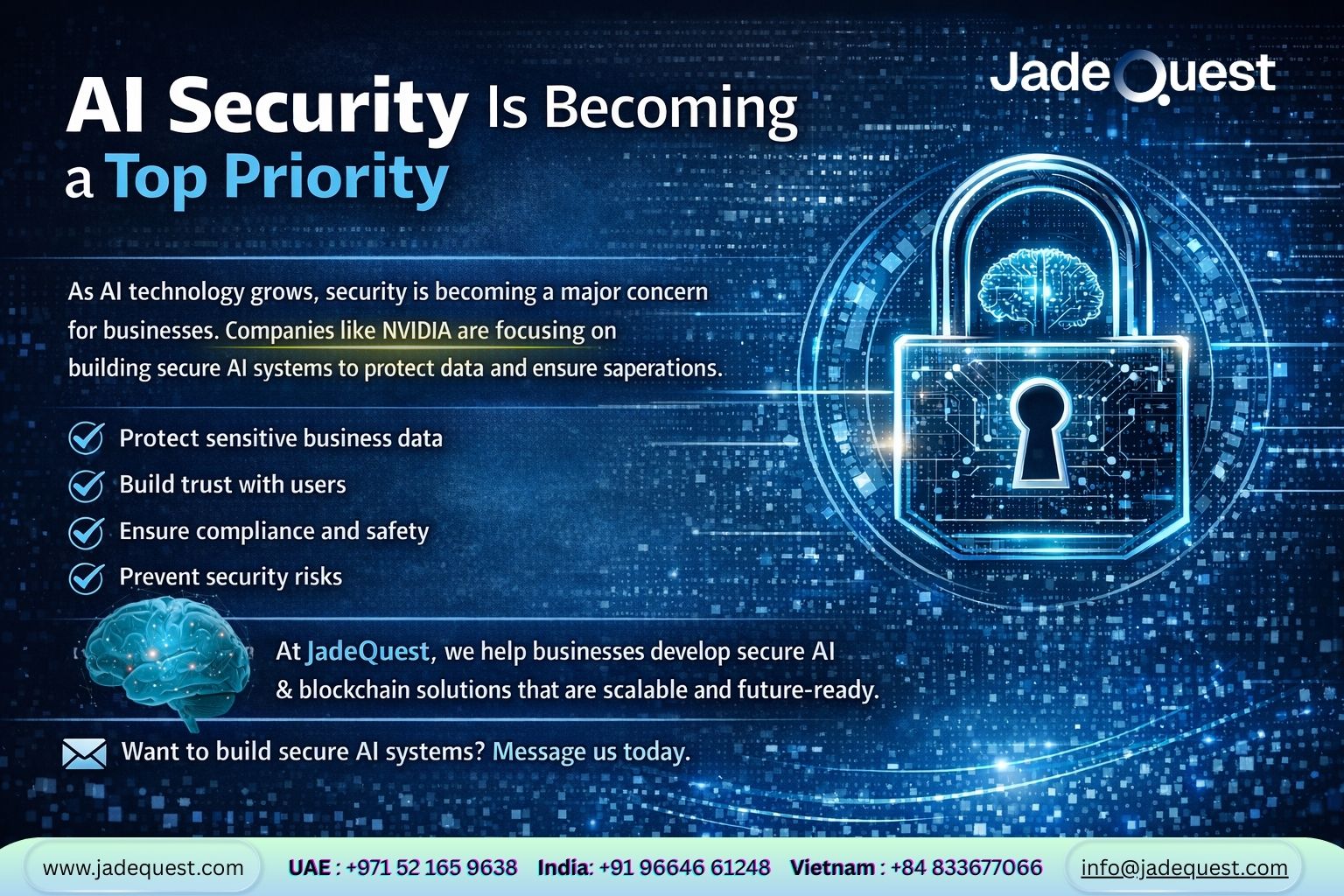
Why AI Security Is Becoming the Next Big Priority for Businesses
Artificial Intelligence is rapidly transforming industries, enabling automation, data-driven decision-making, and smarter digital experiences. H...
Read More →
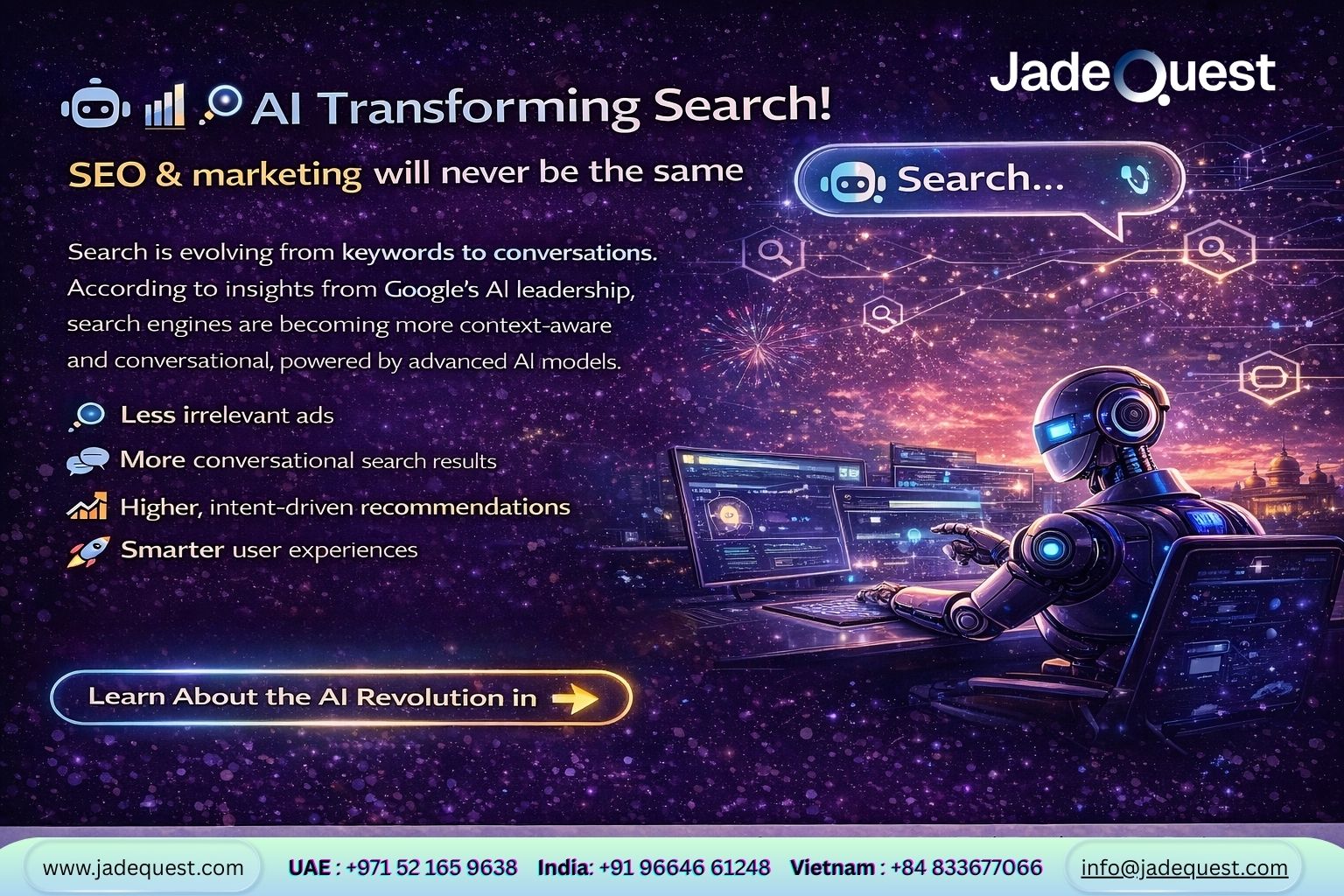
AI Is Transforming Search: What It Means for Businesses | JadeQuest
Artificial Intelligence is reshaping the way people interact with search engines. Instead of relying only on keyword-based queries, modern search expe...
Read More →

JadeQuest Attending India’s Biggest Crypto Carnival in Bengaluru
The JadeQuest team is excited to announce our participation in India’s Biggest Crypto Carnival, taking place in Bengaluru on March 14–15, 2026.Org...
Read More →

JadeQuest Attending ETHMumbai Hackathon 2026
The JadeQuest team is excited to announce our participation in the ETHMumbai Hackathon 2026, taking place from March 13–15, 2026 in Mumbai, India.ET...
Read More →
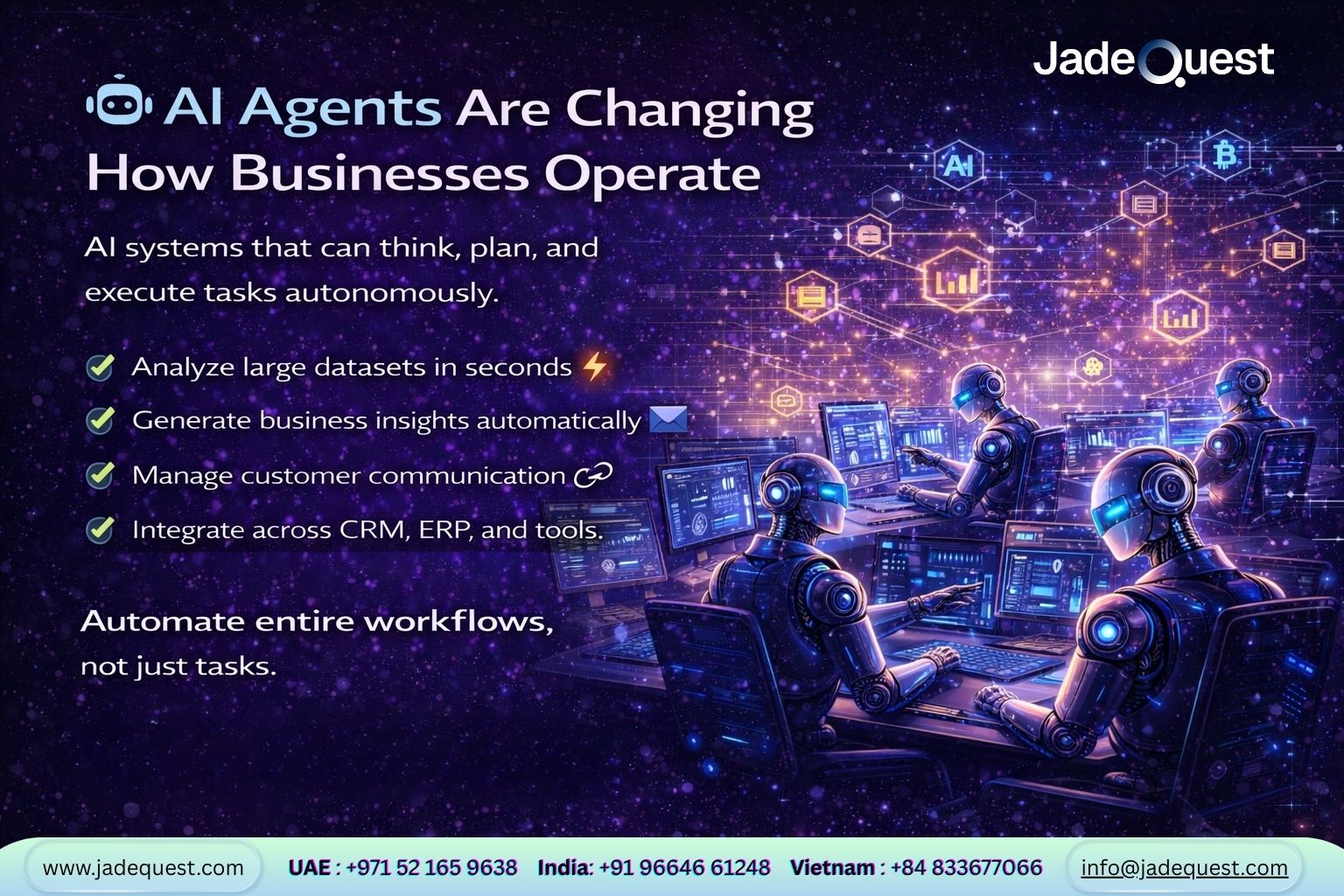
AI Agents Are Changing How Businesses Operate
Artificial Intelligence has already transformed many industries. Most businesses today use AI for limited tasks such as chatbots, predictive analytics...
Read More →
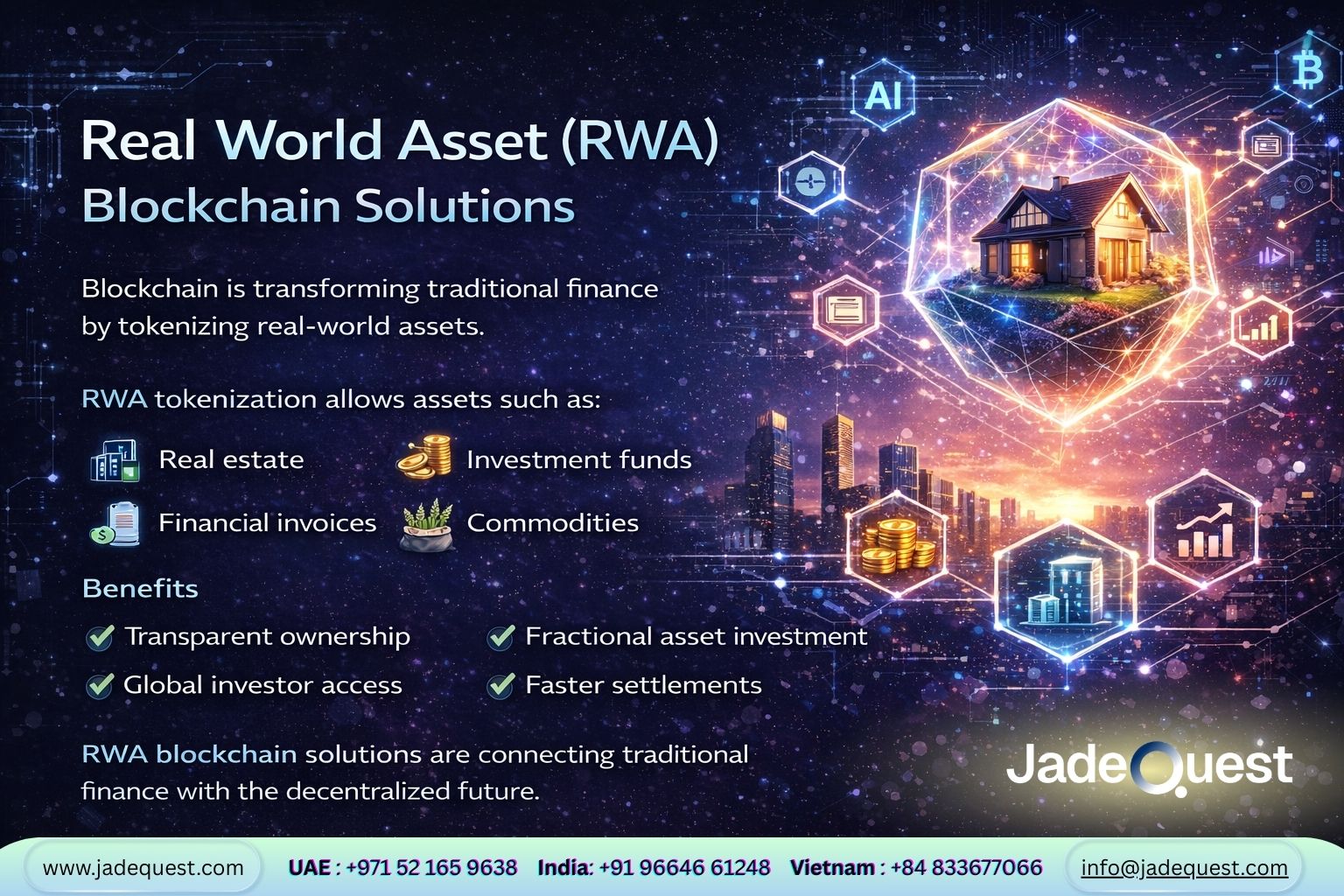
Real World Asset (RWA) Blockchain Solutions: Bridging Traditional Finance and Web3
Blockchain technology is revolutionizing financial systems by enabling the tokenization of real-world assets (RWA). Through blockchain infrastructure,...
Read More →

Start Your Project with the Right Strategy | Get a Free Consultation from Our Experts
Every successful digital project starts with the right strategy.Whether you are building a startup, launching a blockchain platform, developing AI sol...
Read More →
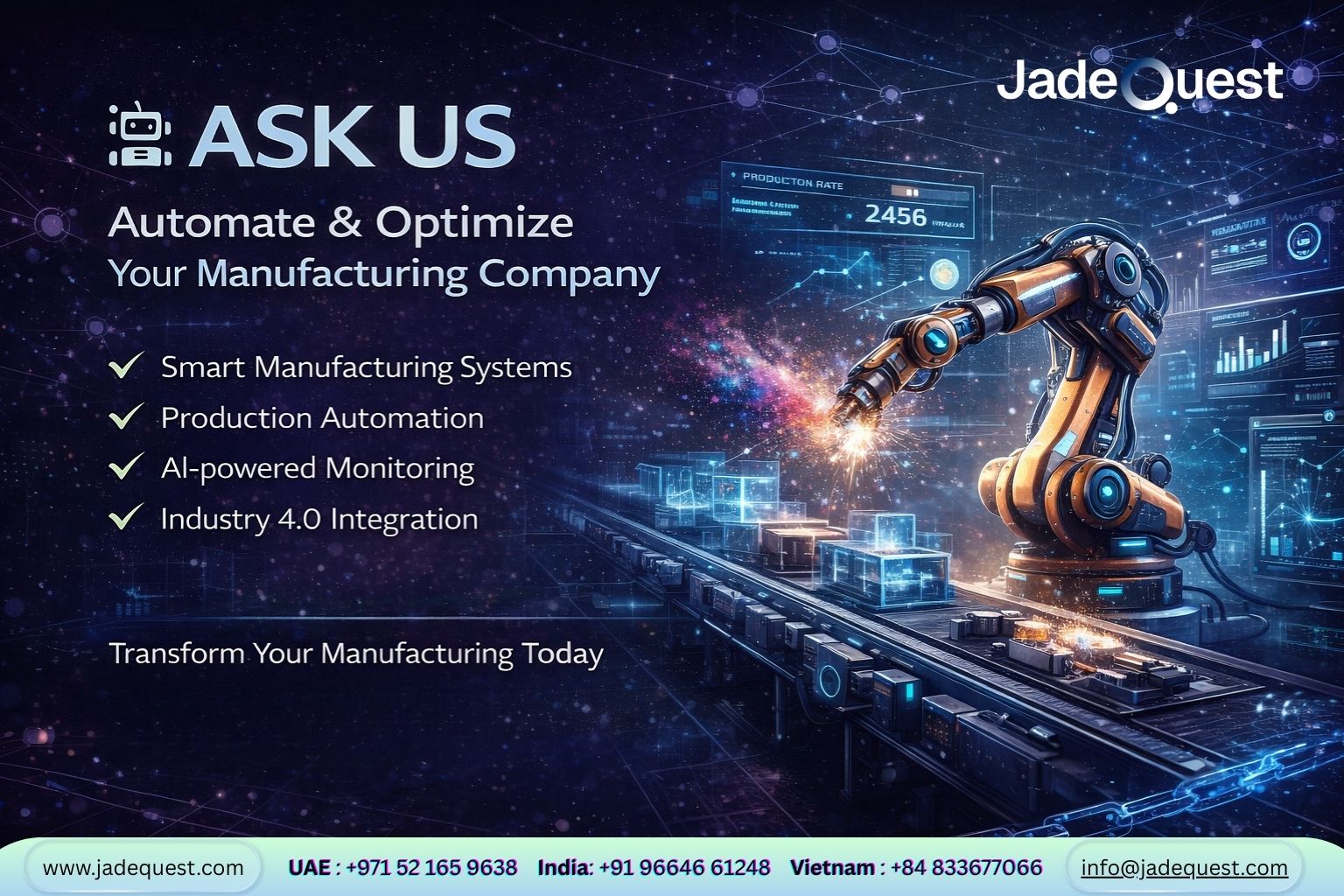
Transform Manufacturing with AI Automation and Industry 4.0 Solutions
The manufacturing industry is entering a new era driven by Artificial Intelligence, automation, and smart technologies. As global competition increase...
Read More →
Hire Expert Blockchain Developers to Build Secure Web3 Infrastructure
The blockchain revolution is transforming industries across finance, healthcare, education, gaming, and government. Businesses today are exploring dec...
Read More →
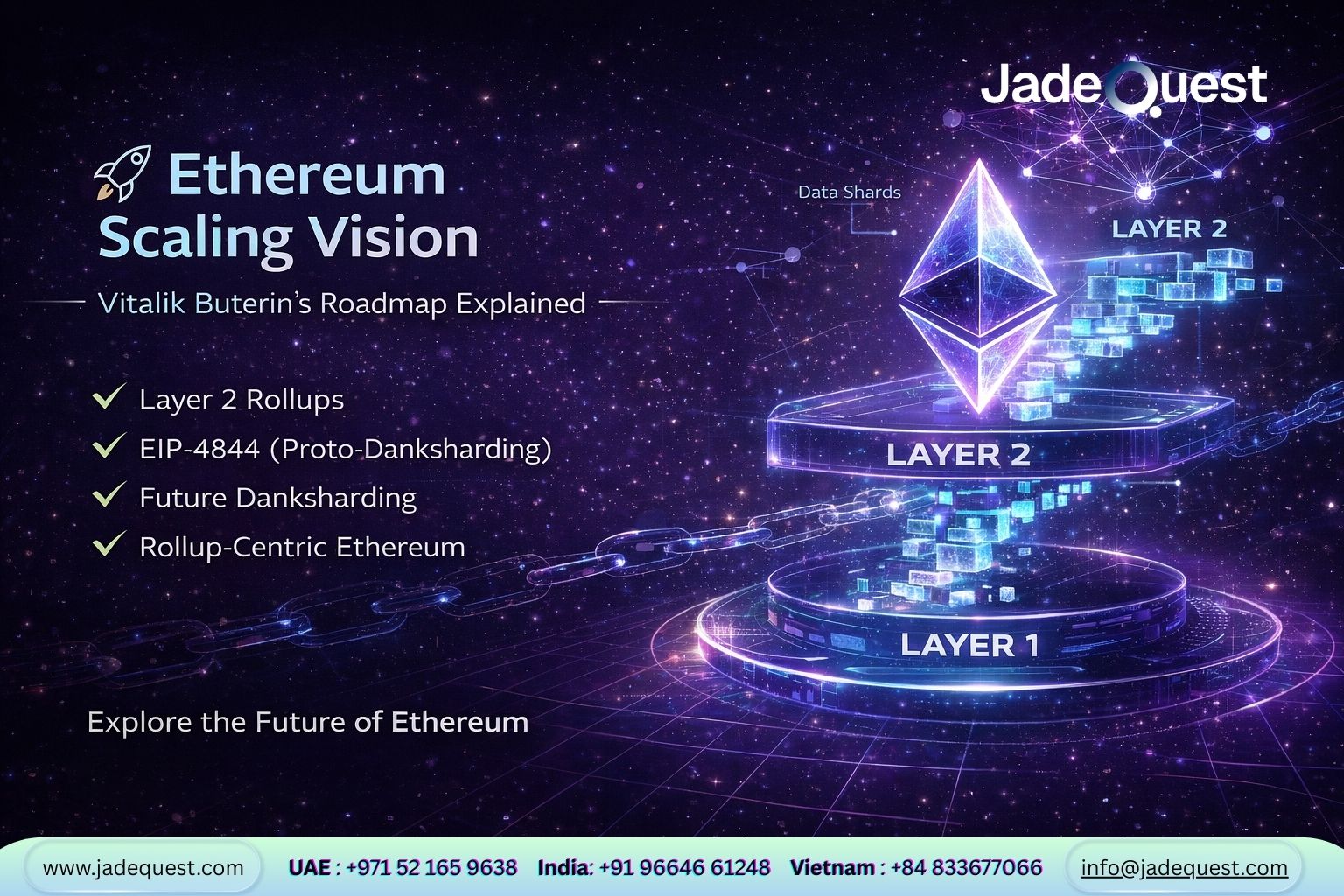
Vitalik Buterin’s Proposed Path to Ethereum Scaling Explained
Ethereum has always prioritized decentralization and security.But scalability has remained its biggest challenge.As network demand grows — DeFi, NFT...
Read More →
Blockchain Gaming: Play-to-Earn Models Explained 🎮🔗
The gaming industry is evolving — not just in graphics or gameplay, but in ownership.Blockchain gaming introduces a fundamental shift:Players are no...
Read More →
🎓 Blockchain Degree Verification: Secure, Instant & Tamper-Proof
Deploy to Verify: How Blockchain Is Transforming Degree VerificationIn a digital-first world, trust is everything.Universities issue millions of certi...
Read More →
𝐆𝐞𝐧𝐞𝐫𝐚𝐭𝐢𝐯𝐞 𝐀𝐈 𝐈𝐧𝐭𝐞𝐠𝐫𝐚𝐭𝐢𝐨𝐧: 𝐇𝐨𝐰 𝐁𝐮𝐬𝐢𝐧𝐞𝐬𝐬𝐞𝐬 𝐀𝐫𝐞 𝐀𝐮𝐭𝐨𝐦𝐚𝐭𝐢𝐧𝐠 𝐈𝐧𝐭𝐞𝐥𝐥𝐢𝐠𝐞𝐧𝐜𝐞 𝐢𝐧 𝟐𝟎𝟐𝟔
Artificial Intelligence is no longer experimental.Generative AI is now operational infrastructure.From content generation to workflow automation and d...
Read More →
7 Reasons Your Business Needs a Professional Website & Mobile App in 2026
In today’s digital economy, your website and mobile application are not just assets — they are revenue engines.Whether you're a startup founder, S...
Read More →
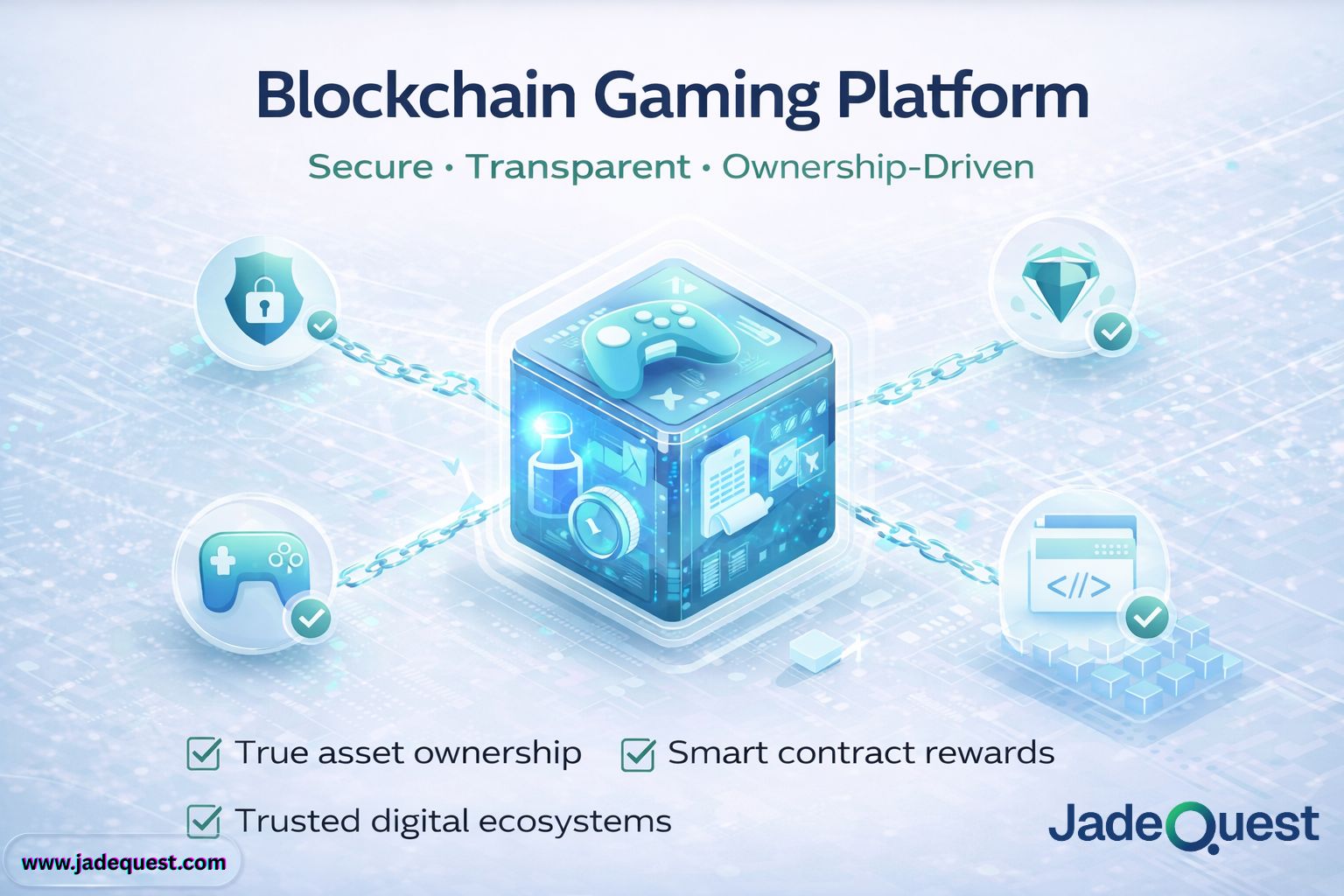
Blockchain Gaming Platform: Secure, Transparent & Ownership-Driven Ecosystems
The gaming industry is evolving beyond entertainment — it is becoming a digital economy. With blockchain technology, players are no longer just user...
Read More →
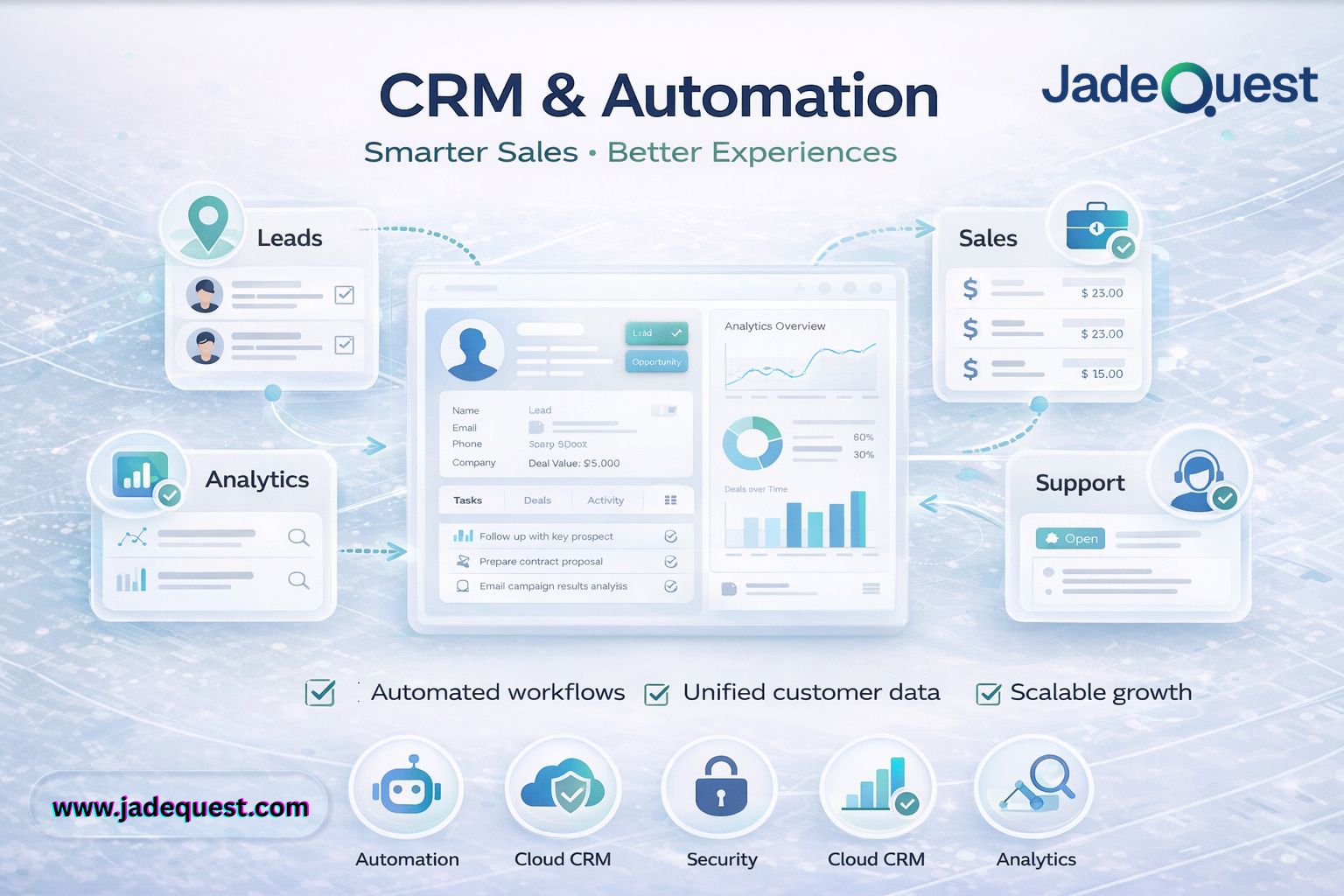
CRM & Automation: Smarter Sales, Better Customer Experiences
In today’s competitive digital economy, businesses no longer win on products alone — they win on relationships, speed, and experience. This is whe...
Read More →
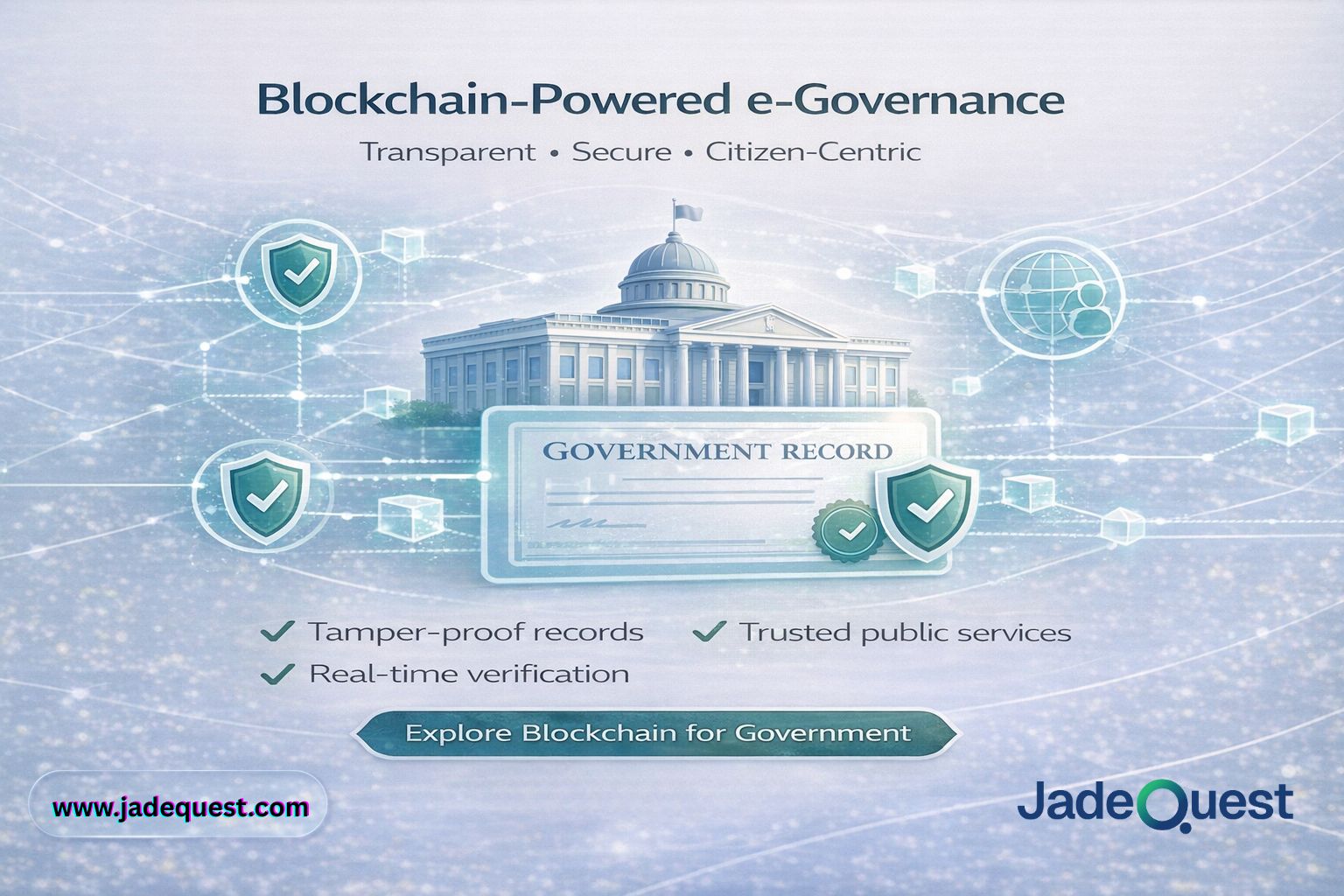
🏛️ Blockchain-Powered e-Governance: Transparent, Secure & Citizen-Centric
Governments worldwide are accelerating digital transformation to improve transparency, trust, and service delivery. Blockchain-powered e-Governance is...
Read More →
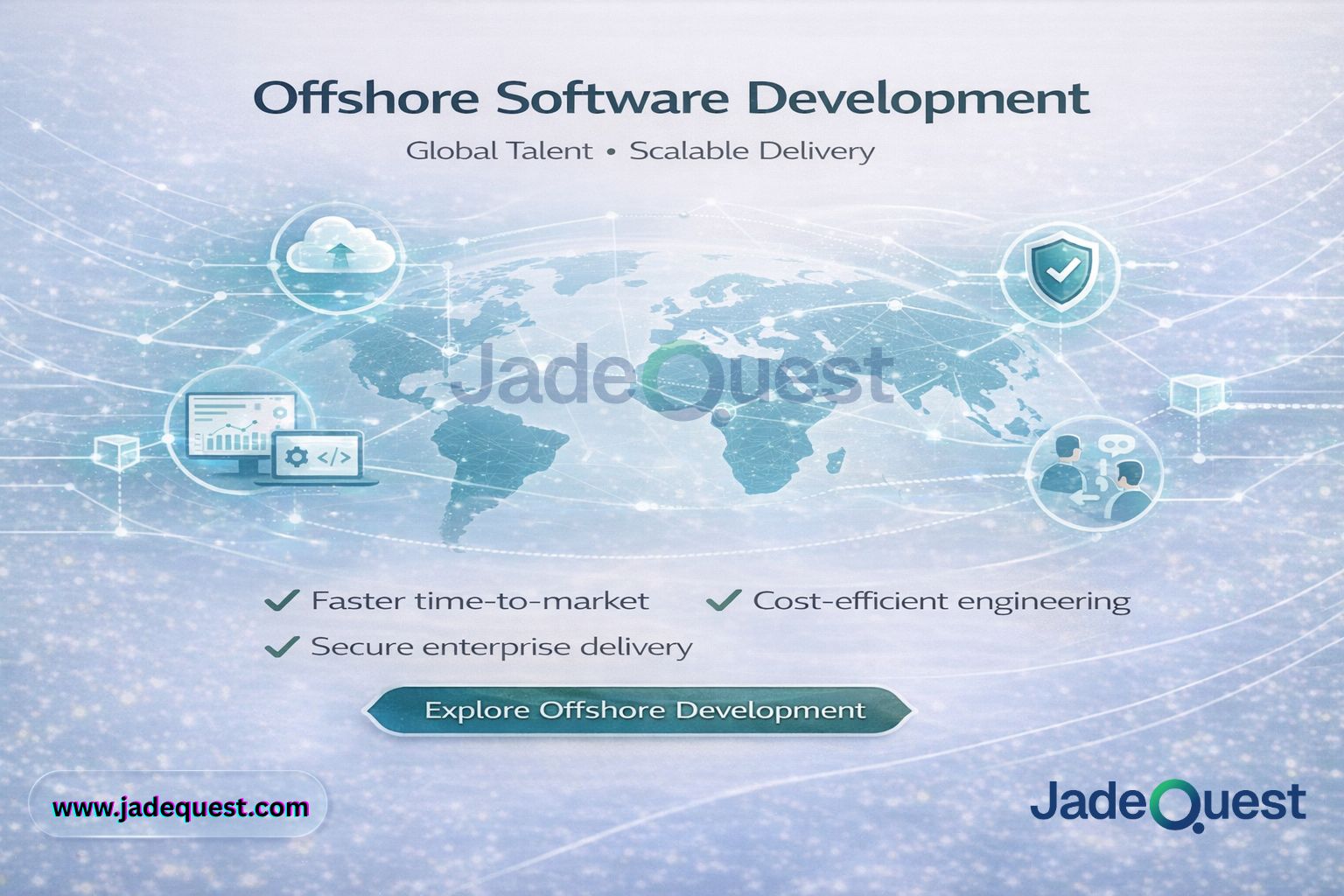
Offshore Software Development: Global Talent, Scalable Delivery
In today’s fast-moving digital economy, enterprises need speed, scalability, and cost efficiency—without compromising security or quality. Offshor...
Read More →
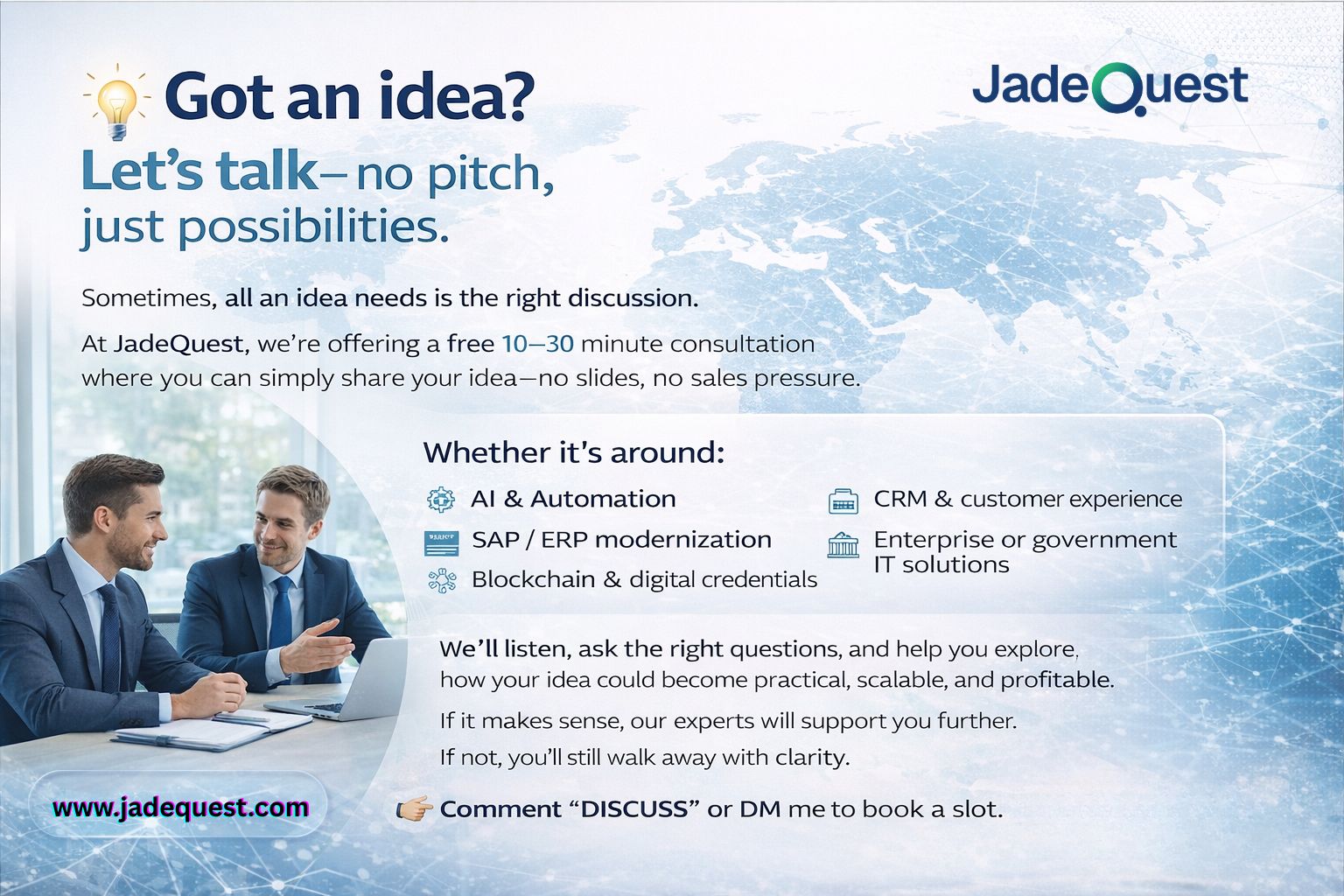
Got an Idea? Let’s Talk — No Pitch, Just Possibilities | Free 10–30 minute consultation
Every great product, platform, or transformation starts with a simple idea.But ideas don’t fail because they’re bad — they fail because they’r...
Read More →
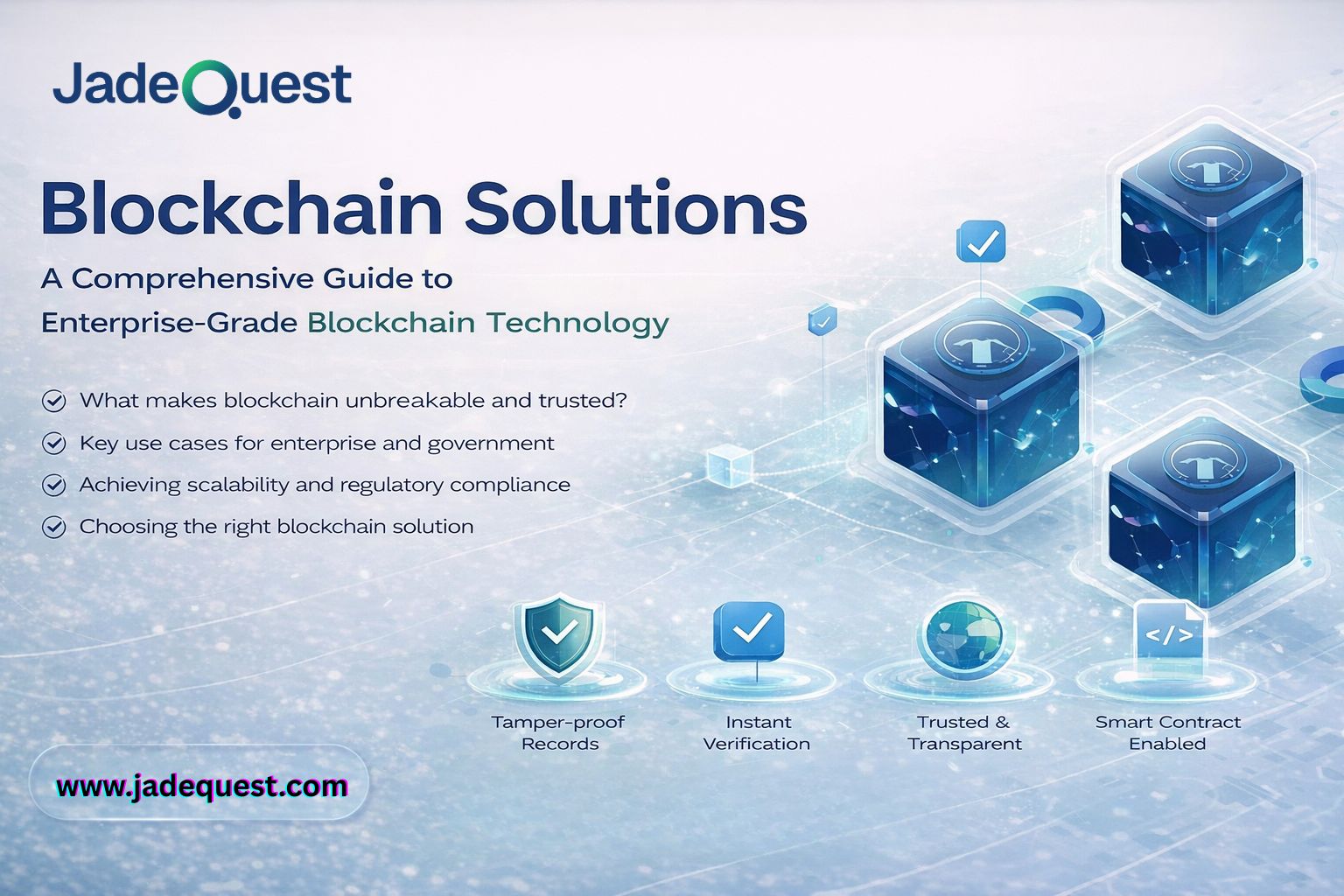
Blockchain Solutions: A Comprehensive Guide to Enterprise-Grade Blockchain Technology By JadeQuest
Blockchain has evolved far beyond cryptocurrency. Today, it is a foundational enterprise technology enabling trust, transparency, security, and automa...
Read More →
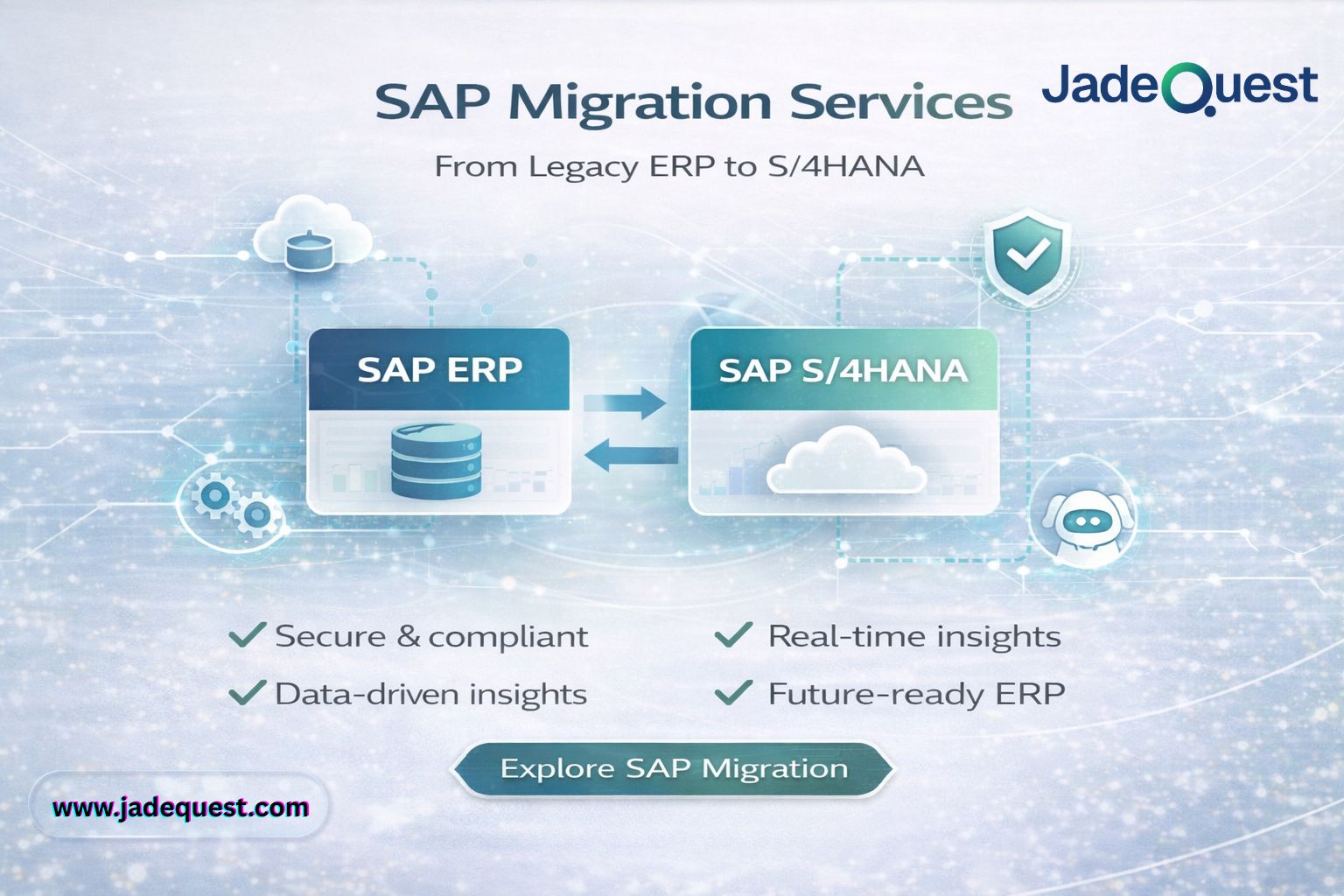
SAP Migration Services: Seamlessly Move from Legacy ERP to SAP S/4HANA | JadeQuest
As enterprises prepare for the future, SAP S/4HANA migration is no longer optional—it’s a strategic necessity. Legacy ERP systems struggle to meet...
Read More →
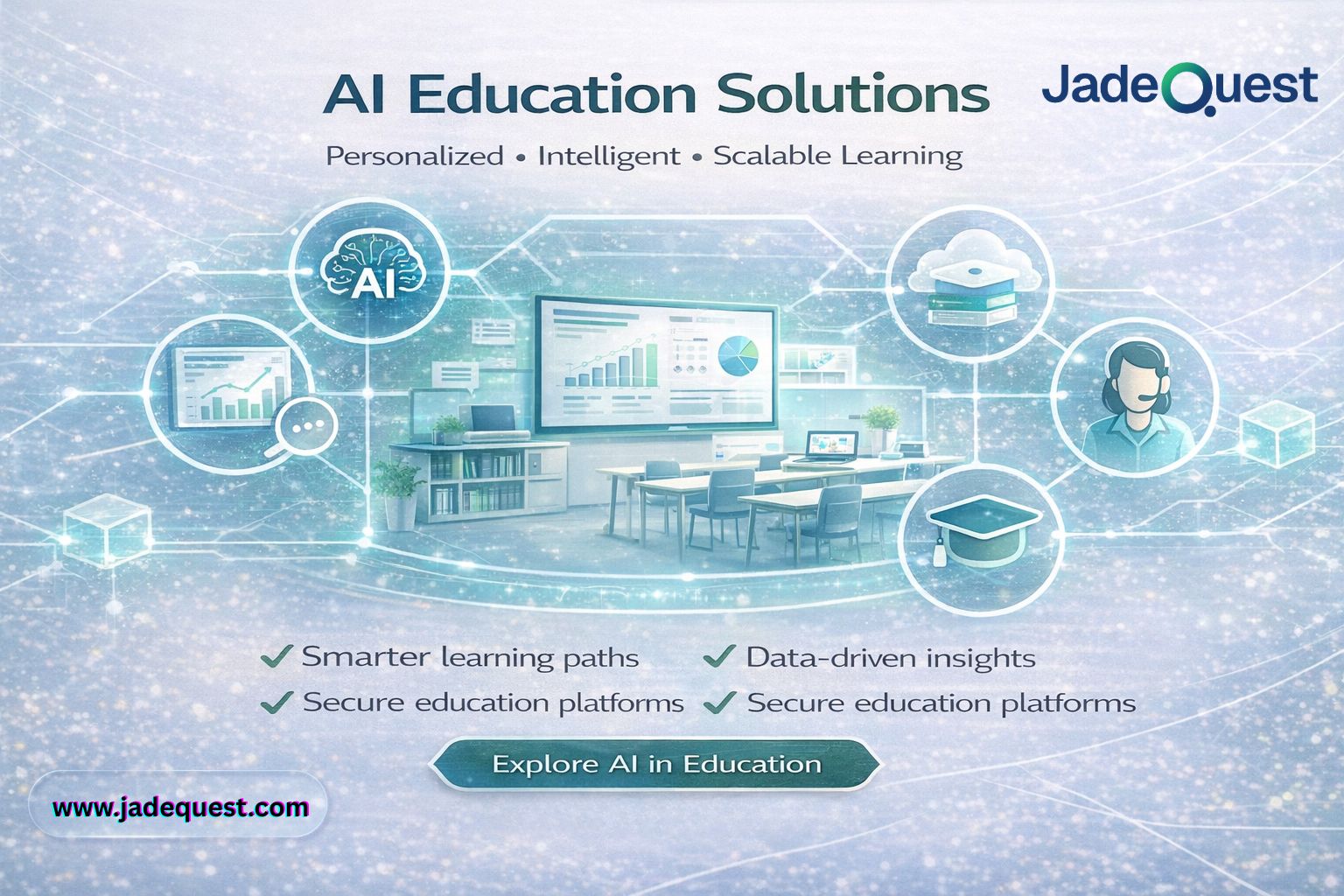
AI Education Solutions: Transforming Learning with Intelligent & Scalable Technology
Artificial Intelligence (AI) is revolutionizing education, enabling institutions to move beyond traditional learning models into personalized, data-dr...
Read More →
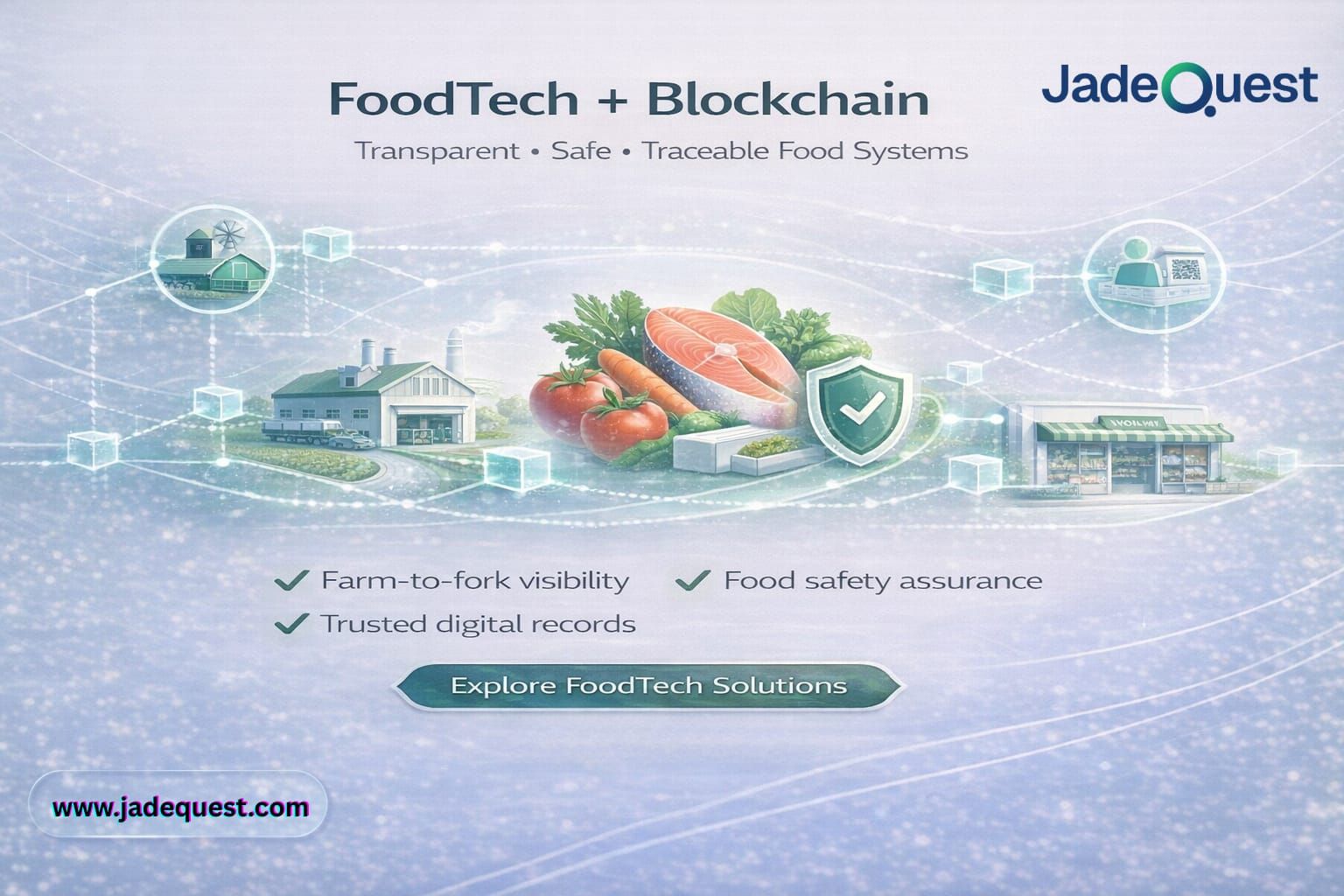
Food Tech Meets Blockchain: Building Transparency, Safety, and Trust Across the Food Supply Chain
The global food industry is undergoing a major transformation. Rising consumer expectations, stricter regulations, food safety incidents, and complex ...
Read More →
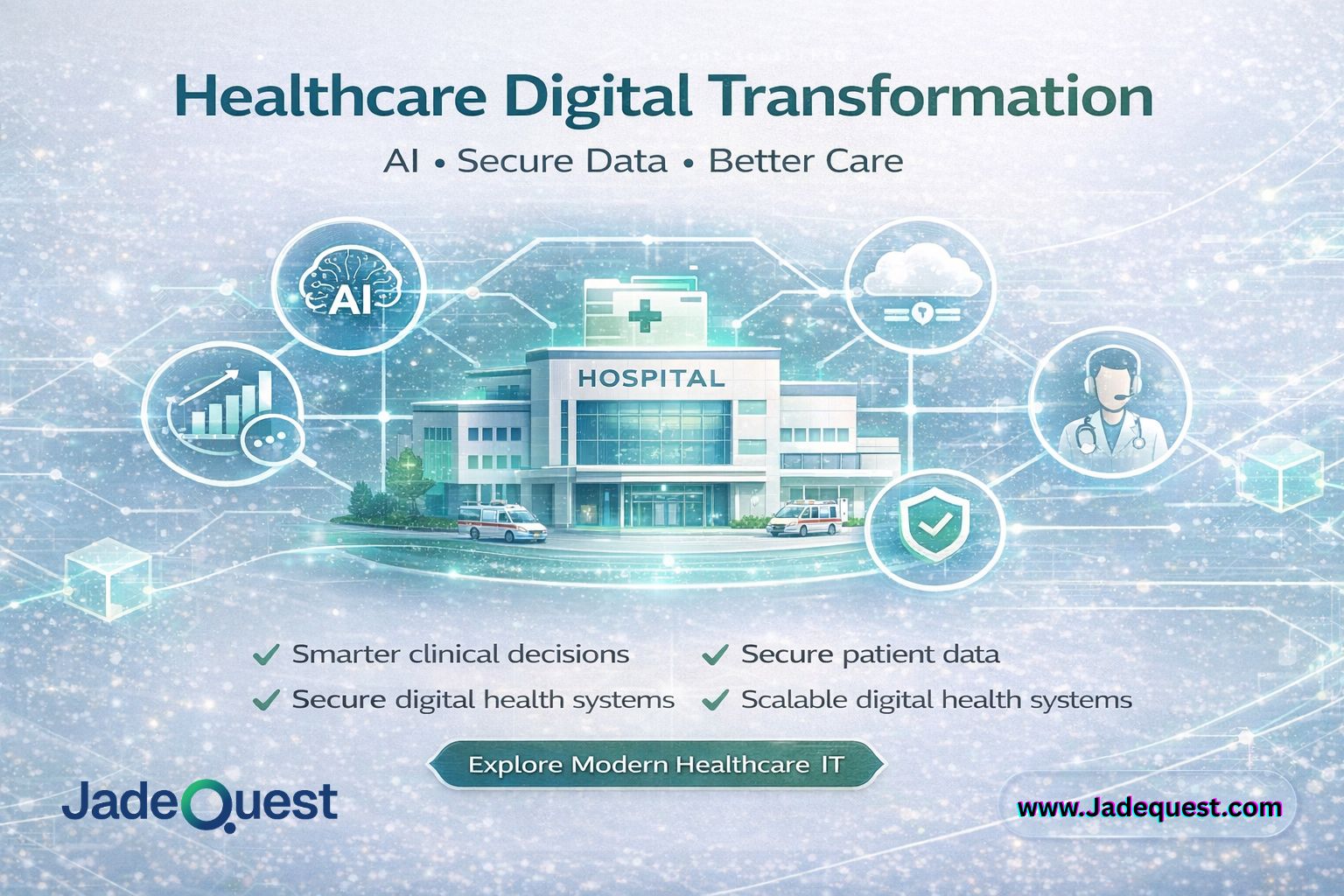
Healthcare Digital Transformation: From Data Silos to Intelligent, Secure Care Delivery
Healthcare systems around the world are at a turning point. Rising patient demand, aging populations, workforce shortages, cybersecurity threats, and ...
Read More →
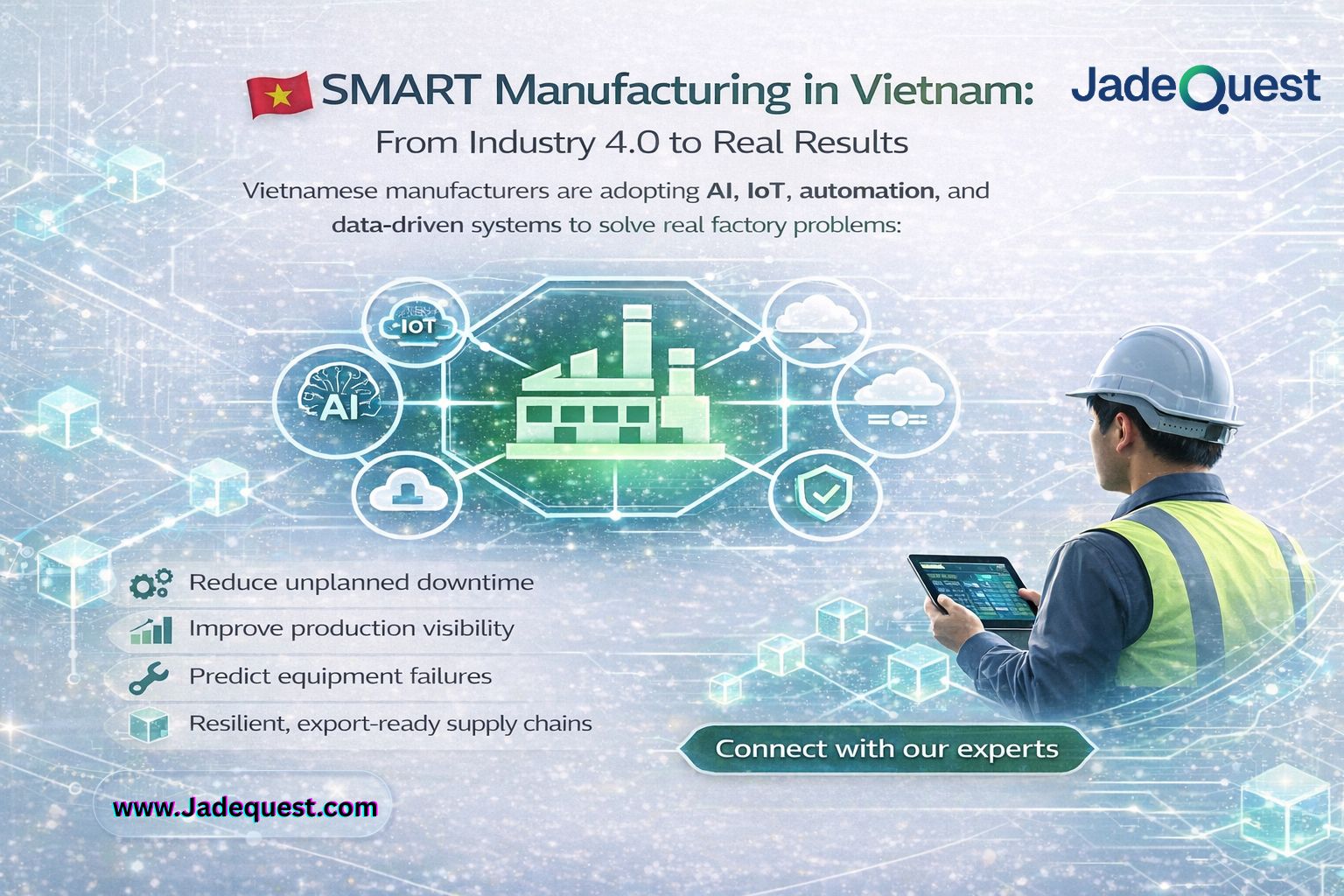
Smart Manufacturing Vietnam: A Practical Guide to Industry 4.0 Adoption for Vietnamese Manufacturers
Vietnam’s manufacturing sector is entering a pivotal phase. Global competition, rising labor costs, and customer demand for higher quality and faste...
Read More →

